Why enterprises choose Polygon for DeFi pilots
Polygon has become the default infrastructure for enterprise DeFi pilots, primarily because it solves the two biggest barriers to institutional adoption: cost and speed. For finance professionals evaluating pilot programs, the network offers sub-cent transaction fees and high throughput, allowing businesses to process real volume from day one without eroding margins on gas costs.
The platform’s architecture is designed to connect directly to deep stablecoin liquidity. This enables instant settlement and reduces the friction typically associated with cross-border payments or tokenized assets. Unlike legacy systems that rely on intermediaries, Polygon provides a trustless environment where transactions are transparent and final, which is critical for compliance and audit trails.
Beyond basic economics, Polygon’s aggressive business development strategy has fostered a robust technology stack that integrates seamlessly with existing Web2 infrastructure. This hybrid approach allows enterprises to leverage decentralized finance protocols while maintaining the reliability and security standards required for institutional use. The result is a scalable environment where security tokens and stablecoins can operate efficiently without the volatility or latency often seen on other Layer 1 networks.
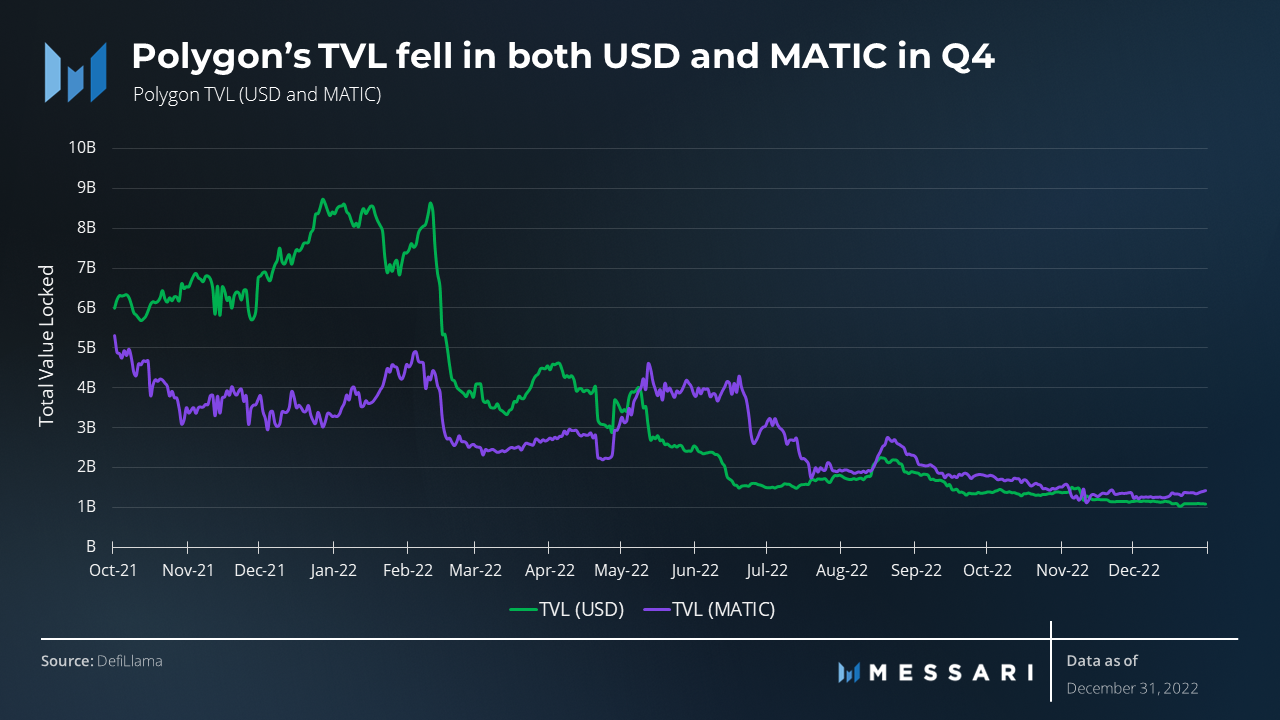
To understand the current market dynamics and network activity driving these pilots, it helps to look at the underlying asset performance.
Stablecoin payments for cross-border settlements
Enterprise finance teams are shifting from traditional wire transfers to stablecoin-based B2B payments. This transition addresses the friction of legacy banking rails, which often involve multi-day settlement times and opaque intermediary fees. Polygon provides the infrastructure for these transactions, offering sub-cent fees and instant finality that make high-volume cross-border payments economically viable.
The mechanism is straightforward: treasury teams hold stablecoins like USDC or USDT on Polygon and send them directly to counterparties. This eliminates the need for correspondent banks in many scenarios, reducing both time and cost. According to Polygon’s own documentation, the network supports high-throughput applications, allowing businesses to scale payment volumes without the latency issues common in other blockchains. This efficiency is critical for working capital management, as funds are available immediately upon transaction confirmation.
Regulatory clarity is also shaping this adoption. The context of the GENIUS Act, as outlined in recent Polygon guides, provides a framework for enterprise payment teams to navigate compliance. By adhering to these emerging standards, companies can leverage stablecoins for payroll, supplier payments, and international settlements with greater confidence. The combination of technical speed and regulatory alignment positions Polygon as a practical choice for enterprise DeFi pilots focused on liquidity and settlement speed.
Security token pilots and regulatory clarity
The Bank of Italy’s recent pilot on Polygon marks a distinct shift from speculative experimentation to regulated institutional adoption. The central bank is using the network to test security token trading in a controlled environment, focusing on compliance and legal certainty rather than just transaction speed. This initiative demonstrates that Polygon’s infrastructure can support the rigorous demands of regulated financial markets.
By exploring different security token designs, the pilot highlights the practical challenges of integrating traditional asset structures with decentralized protocols. The Bank of Italy is not just testing technology; it is validating the legal and operational frameworks required for institutional DeFi. This approach provides a blueprint for other central banks and financial institutions looking to tokenize assets without compromising regulatory standards.
Polygon’s low fees and high throughput make it an attractive candidate for these pilots, but the real value lies in its ability to support identity and compliance layers. As the pilot progresses, the insights gained will likely influence broader industry standards for security token issuance. This move signals that the next phase of DeFi will be defined by regulated, tokenized assets rather than anonymous speculation.
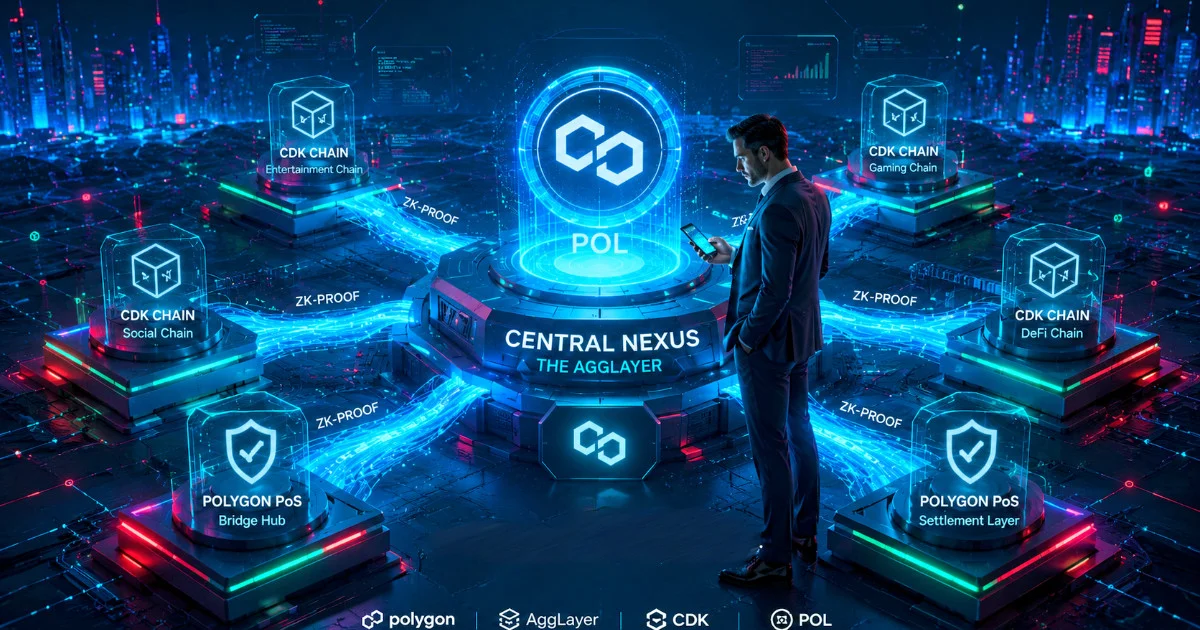
Infrastructure partners and network options
Enterprises rarely deploy on a single, public chain. The architecture you choose dictates your compliance posture, transaction speed, and isolation from network congestion. Polygon offers three distinct paths, ranging from shared public access to fully sovereign private networks.
Shared public access
Polygon PoS (Proof-of-Stake) serves as the base layer. It offers high throughput and sub-cent fees, making it ideal for high-volume, low-value transactions like payments or loyalty rewards. However, because it is a public network, all nodes see all data. This shared environment requires careful data sanitization to meet strict regulatory standards, as competitors or bad actors can monitor on-chain activity.
Sovereign private chains
For institutions requiring total data privacy and custom governance, Polygon CDK (Chain Development Kit) and Supernets provide dedicated infrastructure. Partners like Kaleido enable enterprises to launch these isolated networks quickly. Unlike the public chain, a Supernet allows you to control who validates transactions and what data is shared. This isolation ensures that sensitive financial data remains confidential while still benefiting from Polygon’s security and interoperability standards.
Comparing the options
The table below outlines the technical differences to help you select the right infrastructure for your pilot.
| Network | Data Privacy | Governance | Best Use Case |
|---|---|---|---|
| Polygon PoS | Public | Shared | High-volume public transactions |
| Polygon CDK | Configurable | Custom | Custom tokenomics and rules |
| Supernets | Private | Exclusive | Sensitive institutional data |
Compliance and risk assessment frameworks
Enterprise adoption of Polygon’s DeFi infrastructure requires more than just technical integration; it demands rigorous compliance and risk assessment frameworks. The US Department of the Treasury published its Illicit Finance Risk Assessment of Decentralized Finance in April 2023, highlighting the regulatory scrutiny facing decentralized protocols. For enterprises, this means that every transaction must be traceable and compliant with anti-money laundering (AML) standards.
The payments infrastructure is only half the equation. As noted in industry analyses, fiscal clarity on stablecoin transactions is the other half. This clarity ensures that funds moving through Polygon’s high-throughput network can be audited and verified, reducing the risk of illicit finance exposure.
Polygon supports high-throughput applications with sub-cent fees, which lowers payment costs and improves margins as businesses scale. However, this efficiency must be balanced with fiscal transparency. By integrating compliance tools that align with Treasury guidelines, enterprises can leverage Polygon’s liquidity while maintaining regulatory integrity.
Checklist for launching a Polygon DeFi pilot
Before committing capital or engineering cycles, enterprise teams should validate their infrastructure and compliance posture. A structured pilot reduces the risk of regulatory friction and technical debt. Use the following steps to ensure your Polygon DeFi pilot is built on a solid foundation.

Choose a node provider or enterprise platform like Kaleido that offers institutional-grade security and audit trails. Verify that the provider supports Polygon’s specific consensus mechanisms and offers SLAs for uptime and data availability.
Align your pilot with the US Department of the Treasury’s DeFi Risk Assessment guidelines. Map out the flow of funds, identify potential illicit finance risks, and implement transaction monitoring tools to ensure fiscal clarity from day one.
Adopt smart contract wallets (such as those from Sequence) to simplify user onboarding and improve security. These solutions allow for social recovery, gas sponsorship, and batched transactions, which are critical for enterprise user experience.
Deploy your smart contracts to a testnet or a private Polygon sidechain. Simulate cross-border payments and treasury operations to validate settlement speeds and fee structures before moving to mainnet.
Consult with legal counsel to ensure your stablecoin transactions comply with emerging regulations like the GENIUS Act. Establish clear accounting procedures for digital asset holdings and reporting requirements.
Frequently asked questions about enterprise pilots
Enterprise teams often start with foundational questions before committing to infrastructure. Here are the most common queries regarding Polygon’s role in institutional finance.
No comments yet. Be the first to share your thoughts!