Polygon's enterprise pivot in 2026
Polygon is rewriting its own playbook. After surviving the crypto winter and the post-FTX enterprise exodus, the network has stopped chasing the speculative DeFi boom of 2021. Instead, it is building a stablecoin-first infrastructure designed for institutional payments. This isn't just a marketing tweak; it is a structural overhaul backed by a $250 million acquisition strategy that includes Coinme and Sequence. The goal is to turn Polygon into the rails for global fiat-to-crypto settlement.
The shift from general-purpose smart contracts to dedicated payment infrastructure changes the competitive landscape. While other chains compete on raw transaction speed or developer count, Polygon is focusing on the friction points that keep traditional finance away: compliance, on-ramps, and wallet abstraction. By owning the stack from the user interface (Sequence) to the fiat entry point (Coinme), Polygon aims to solve the "last mile" problem that has stalled enterprise adoption for years.
Market sentiment reflects this strategic realignment. Investors and developers are watching closely as the network transitions from a high-throughput playground to a regulated payment corridor. The following chart tracks POL/USD, showing how the market has reacted to these foundational shifts in Polygon's business model.
This pivot defines the current landscape of polygon enterprise defi pilots market research. We are no longer looking at experimental DeFi protocols. We are looking at live payment pilots that leverage Polygon's new acquisition stack to process real-world transactions with lower friction and higher compliance standards.
Three main enterprise pilot categories
Polygon’s current enterprise activity falls into three distinct buckets: B2B payments, security tokens, and creator payouts. Each category serves a different part of the financial ecosystem, but all rely on the same underlying infrastructure to move value faster and cheaper than traditional rails.
B2B payments and treasury management
Enterprise finance teams are using stablecoins for cross-border B2B payments, treasury management, and payroll. The primary driver is cost savings and speed. Polygon’s low fees make micro-transactions and high-volume settlements practical for corporate treasuries that previously found blockchain too expensive or slow.
Source: Polygon Blog - Stablecoin Payments for Enterprise
Security token trading
Bank of Italy is running a pilot to create a regulated environment for security token trading. The project explores different designs for security tokens, aiming to bridge traditional finance with decentralized markets. This pilot shows how legacy institutions are testing blockchain for regulated asset issuance and secondary trading.
Source: Yahoo Finance - Bank of Italy Taps Polygon
Creator payouts
Polygon is part of Meta’s new stablecoin payouts pilot for creators, alongside Solana and Stripe. This initiative gives creators direct dollar access through stablecoins, bypassing traditional payment intermediaries. The pilot tests how blockchain can streamline monetization for digital content platforms.
Source: LinkedIn - Polygon Joins Meta Stablecoin Payouts
| Category | Use Case | Regulatory Status | Target Audience |
|---|---|---|---|
| B2B Payments | Cross-border settlements, payroll, treasury | Standardized stablecoin transfers | Corporate finance teams |
| Security Tokens | Regulated asset trading and issuance | Pilot for regulated compliance | Institutional investors, banks |
| Creator Payouts | Direct monetization for digital content | Stablecoin-based platform payout | Content creators, platforms |
infrastructure requirements for scale
Enterprise finance teams don’t just need a blockchain; they need a ledger that behaves like a traditional database but settles like a public record. When evaluating polygon enterprise defi pilots market research, the differentiator is the underlying technical backbone. It must handle high-frequency transactions without the latency spikes that plague legacy systems or congested networks.
The architecture supporting these pilots relies on low-latency finality and predictable cost efficiency. For cross-border B2B payments and treasury management, the ability to process thousands of transactions per second with near-zero fees is not a luxury—it is a requirement. Polygon’s proof-of-stake consensus mechanism allows validators to verify transactions quickly, ensuring that compliance checks and settlement instructions execute in seconds rather than minutes or hours.
Compliance-ready design is equally critical. The infrastructure supports modular components that allow enterprises to integrate identity verification and audit trails directly into the transaction flow. This means that every move of digital assets can be traced and verified in real-time, satisfying regulatory requirements without sacrificing speed. The result is a system that feels familiar to finance professionals while offering the transparency of public blockchain technology.
The economic model reinforces this utility. By keeping transaction costs minimal, enterprises can execute micro-payments and frequent rebalancing strategies that would be prohibitively expensive on higher-fee networks. This cost structure enables new business models, such as real-time payroll in stablecoins or automated invoice settlement, which were previously impractical due to network friction.
Market context and institutional signals
The broader decentralized finance landscape is expanding rapidly, with industry reports projecting a compound annual growth rate of roughly 25% through 2030. This surge in total addressable market creates a fertile environment for enterprise pilots, as traditional financial institutions seek scalable infrastructure to manage growing digital asset volumes. Polygon’s positioning in this sector is not merely about technology; it is about fitting into a larger narrative of institutional adoption where speed and cost efficiency are non-negotiable.
Polygon has emerged as a leading Layer 2 scaling solution for DeFi, offering the throughput required by enterprise-grade applications. Unlike earlier iterations of blockchain networks that struggled with congestion, Polygon’s architecture allows institutions to deploy complex financial instruments without the prohibitive gas fees that often deter large-scale participation. This shift has encouraged a wave of pilots from banks, payment processors, and asset managers looking to test blockchain-based settlement layers.
To understand the current momentum, it helps to look at the asset itself. The live valuation of POL provides a real-time indicator of market sentiment surrounding Polygon’s enterprise roadmap.
These enterprise pilots serve as a barometer for the next phase of crypto adoption. As more financial players move from experimental stages to production-ready deployments on Polygon, the network becomes increasingly integral to the global financial infrastructure. The data suggests that the focus is shifting from speculative trading to utility-driven applications, with Polygon’s low-cost environment acting as a primary enabler for this transition.
Evaluating polygon enterprise defi pilots market research
Before committing capital to a pilot, your team needs to verify that Polygon’s current infrastructure aligns with your specific compliance and operational requirements. This isn't about abstract potential; it's about whether the ledger can handle your volume, privacy needs, and audit trails today.
Polygon’s architecture supports zero-knowledge proofs and permissioned sidechains, which are essential for meeting strict financial regulations. Ensure your pilot utilizes these features to maintain data sovereignty and meet KYC/AML standards before deploying to mainnet.
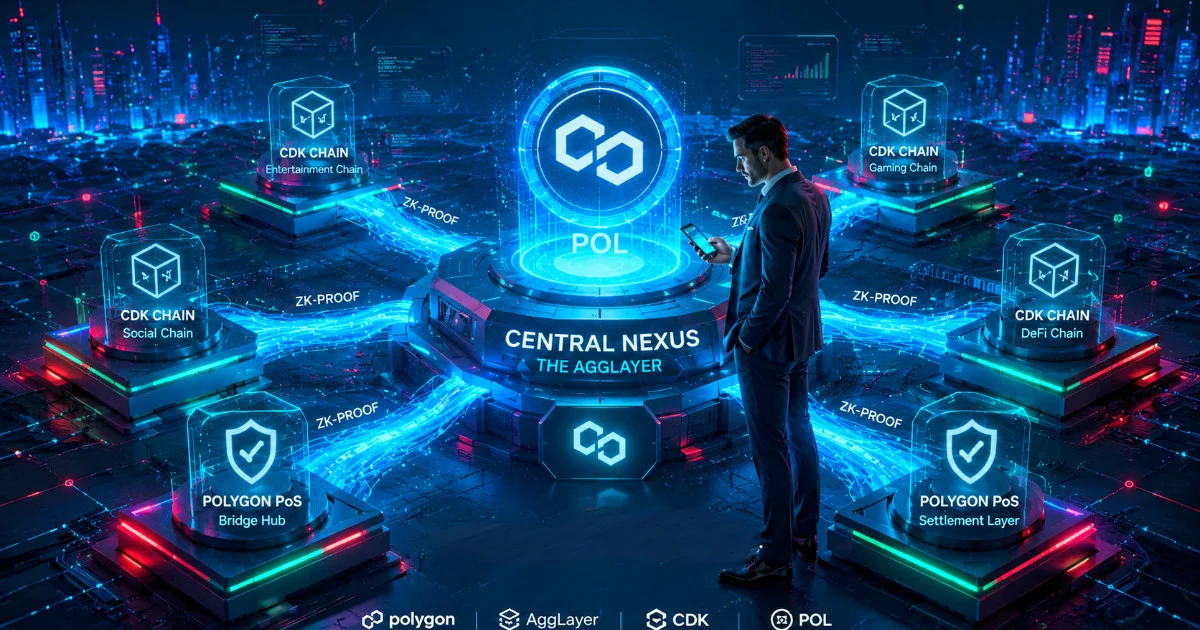
Enterprise pilots often fail because they underestimate gas volatility during peak loads. Run stress tests using Polygon’s zkEVM or PoS chains to confirm that transaction finality and fees remain stable under your expected B2B payment volume.
Review the specific smart contracts used in the pilot for known vulnerabilities. Polygon’s enterprise pilots often involve custom tokenization logic; ensure these contracts have undergone third-party audits and are compatible with your existing treasury management systems.

Your pilot must bridge seamlessly with existing ERP or banking APIs. Verify that the Polygon node infrastructure supports the RPC endpoints and data formats your current financial stack requires to avoid costly integration delays.
| Feature | Enterprise Need | Polygon Capability |
|---|---|---|
| Data Privacy | GDPR/CCPA Compliance | Zero-Knowledge Proofs |
| Transaction Speed | High-Frequency Trading | Sub-Second Finality |
| Auditability | Regulatory Reporting | Transparent Ledger Access |
TechnicalChart symbol="NASDAQ:MATIC" chartStyle="candle" interval="1D" indicators='["volume","rsi"]' />
Common questions about polygon enterprise defi pilots market research
Investors and enterprise architects often ask how Polygon fits into the current market landscape, especially regarding its technical utility and tokenomics. Understanding these mechanics is essential when evaluating polygon enterprise defi pilots market research for long-term integration.
Is Polygon an Indian project?
Polygon was founded in India, but it operates as a global technology protocol. The team is distributed internationally, focusing on Ethereum scalability rather than regional adoption. This global structure allows it to serve enterprise clients across multiple jurisdictions.
Is Polygon a DeFi coin?
Polygon serves as the underlying infrastructure for decentralized finance. It is not a DeFi token itself but the Layer 2 network that powers thousands of DeFi applications. Its utility lies in providing low-cost, high-speed transactions for these protocols.
How does Polygon make money?
The network secures itself through a proof-of-stake mechanism. Validators process transactions and earn fees, while users pay gas fees in POL. This model creates a self-sustaining economy where value accrues to network participants based on usage.
Can Polygon MATIC reach $1000?
A $1,000 price per POL would require a market capitalization exceeding $10 trillion, which surpasses the entire current cryptocurrency market. While the token has strong enterprise utility, this specific price target is mathematically improbable under current market conditions.
Helpful gear
Use these product recommendations as a starting point, then choose the size, material, and price point that fit how you actually use the gear.


As an Amazon Associate, we may earn from qualifying purchases.
No comments yet. Be the first to share your thoughts!