Why enterprises choose Polygon for DeFi pilots
Institutional pilots require more than just low transaction fees; they demand infrastructure that mirrors traditional finance reliability. Polygon offers a distinct value proposition for enterprises by combining Ethereum’s security model with the throughput necessary for high-volume financial operations. Unlike generic layer-two solutions that may compromise on finality or decentralization, Polygon anchors its security to Ethereum, providing the institutional trust required for banking and payment integrations.
The network’s architecture supports high capacity with near-instant finality, a critical requirement for real-time settlement systems. This allows enterprises to process thousands of transactions per second at a fraction of the cost of layer-one chains, making micro-transactions and high-frequency trading viable. For pilot programs, this means testing complex financial logic without the prohibitive gas costs that often stall proof-of-concept deployments on other networks.
Compliance and stability are equally important. Polygon’s focus on institutional-grade infrastructure includes robust tooling for identity verification and regulatory reporting. By choosing Polygon, enterprises can leverage a proven ecosystem that prioritizes security audits and enterprise support, reducing the operational risk associated with deploying new DeFi protocols. This balance of cost, speed, and security makes it a pragmatic choice for initial institutional adoption.
Stablecoin payments for cross-border settlement
Enterprise finance teams are increasingly treating stablecoins as a practical rail for cross-border B2B payments, treasury management, and payroll. The shift is driven by the need to bypass the delays and opacity of traditional correspondent banking while maintaining strict compliance standards.
The core advantage lies in settlement speed. While SWIFT transfers often take one to three business days to clear, stablecoin transactions on Polygon settle in seconds. This immediacy allows treasury teams to manage liquidity more efficiently, reducing the capital tied up in transit. For global supply chains, this speed translates directly into working capital optimization.
Cost savings are equally significant. Traditional cross-border payments involve multiple intermediary banks, each taking a cut and adding foreign exchange spreads. Polygon’s infrastructure keeps transaction fees minimal, often less than a cent, regardless of the transfer amount. This makes it viable to process smaller, frequent payments that were previously too expensive to execute via traditional banking channels.
Compliance remains a priority for enterprise adoption. Polygon supports regulated stablecoins and integrates with identity verification protocols, ensuring that transactions meet anti-money laundering (AML) and know-your-customer (KYC) requirements. This regulatory alignment is essential for institutions looking to integrate digital assets into their existing financial infrastructure without exposing themselves to unnecessary risk.
To understand the market context, it helps to look at the performance of the primary stablecoins used in these transactions. USDC and USDT remain the dominant assets for enterprise settlement due to their liquidity and regulatory clarity.
The infrastructure supporting these payments continues to mature. Non-custodial smart wallets and programmable money features allow for automated reconciliation and conditional payments, further reducing the administrative burden on finance teams. As these tools become more standardized, we expect to see broader adoption across mid-market enterprises, not just large multinationals.
Security tokenization and central bank pilots
The conversation around institutional DeFi has shifted from theoretical exploration to active, regulated pilots. Two major initiatives stand out for their focus on compliance and security token design: the Bank of Italy’s recent partnership with Polygon and J.P. Morgan’s ongoing exploration of blockchain-based capital markets.
Bank of Italy’s Regulatory Sandbox
The Bank of Italy recently launched a pilot program in collaboration with Polygon to test the viability of security tokens within a strictly regulated environment. The primary goal is not just to issue tokens, but to explore different structural designs for security tokens that meet existing financial regulations. This initiative aims to create a sandbox where institutions can experiment with tokenized assets without the usual compliance uncertainty. By leveraging Polygon’s infrastructure, the pilot seeks to demonstrate how public blockchains can support the stringent data integrity and auditability requirements of traditional finance.
J.P. Morgan’s Institutional DeFi Exploration
Simultaneously, J.P. Morgan is conducting its own pilot to determine whether DeFi protocols can be deployed on public blockchains to deliver capital markets services. The initiative focuses on opening up business services that are traditionally siloed, aiming for a more efficient and transparent system. This effort highlights the growing interest among major banks in using public infrastructure for institutional-grade applications, provided that security and regulatory standards are maintained.
These pilots are critical for the future of Polygon’s enterprise strategy. They provide real-world validation for using Polygon in high-stakes financial environments, moving beyond speculative assets to tangible, regulated financial instruments. The focus on security token design and compliance-ready infrastructure positions Polygon as a viable backend for the next generation of digital finance.
Comparing Polygon infrastructure for institutional needs
Institutional DeFi requires more than just low fees; it demands infrastructure that aligns with existing banking rails. Polygon offers distinct pathways for enterprises, ranging from the Polygon CDK for custom sovereign chains to shared security models on the mainnet. Understanding these options helps finance teams choose the right balance of control, compliance, and cost.
Enterprise Features vs. Traditional Rails
The primary advantage of Polygon for enterprise payments is the combination of Ethereum-anchored security with sub-second finality. Unlike traditional cross-border settlements that take days, Polygon enables instant finality at scale, reducing counterparty risk and liquidity traps. The infrastructure supports high transaction throughput, making it viable for high-volume payment systems that legacy banking networks struggle to handle efficiently.
| Feature | Polygon Enterprise (CDK/Supernet) | Traditional SWIFT/Banking Rails | Public Ethereum L1 |
|---|---|---|---|
| Finality | Sub-second (Instant) | 1-3 Business Days | ~12-15 Minutes |
| Cost per Tx | < $0.01 | $15 - $50+ | $1.00 - $10.00+ |
| Security Model | Ethereum-Anchored / Sovereign | Centralized Intermediaries | Decentralized Consensus |
| Compliance | Built-in Identity & Access Control | Native Regulatory Frameworks | Pseudonymous (Anonymity) |
| Throughput | 10,000+ TPS (Configurable) | Limited by Batch Processing | ~15-30 TPS |
For institutions prioritizing regulatory compliance and data sovereignty, the Polygon CDK allows for the creation of custom application-specific chains. These chains can enforce strict identity checks and access controls while still inheriting the security guarantees of the Ethereum mainnet. This hybrid approach bridges the gap between decentralized technology and centralized regulatory requirements.
The choice between a shared L2 and a custom Supernet often depends on the volume and sensitivity of the data. High-frequency trading platforms may prefer the shared liquidity and lower latency of the main Polygon PoS chain, while large-scale settlement networks might opt for a dedicated CDK chain to ensure predictable performance and isolated compliance boundaries.
How to evaluate Polygon for your business
Before committing resources to a Polygon pilot, run your infrastructure and compliance requirements through this three-step checklist. This approach separates viable enterprise use cases from experimental noise.
Start by mapping your existing regulatory obligations against Polygon’s architecture. Since Polygon is an Ethereum Layer 2 solution, your legal team must understand how cross-chain bridging and smart contract execution intersect with current financial regulations. Determine if your jurisdiction recognizes on-chain assets for accounting or tax purposes. If your industry is heavily regulated, such as banking or healthcare, prioritize solutions that offer permissioned access or clear audit trails, as outlined in Polygon’s official enterprise guides.
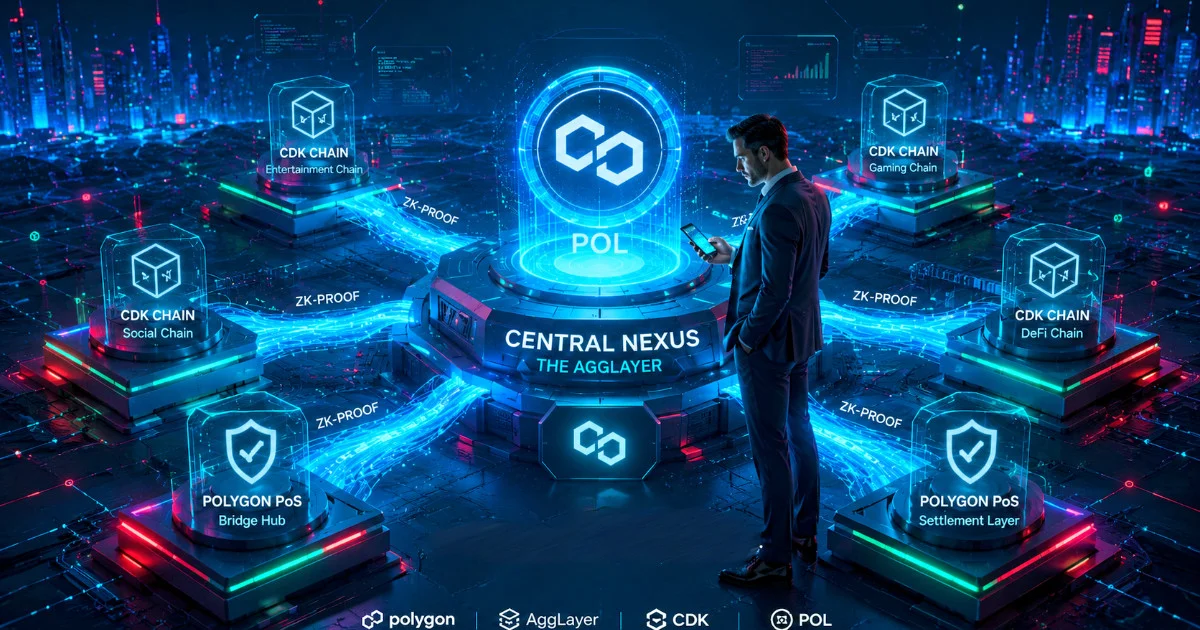
Evaluate how Polygon fits into your current ERP, treasury, or payment systems. The primary advantage here is low transaction costs and high speed, but only if your developers can integrate Polygon SDKs or APIs smoothly. Run a small-scale test: move a non-critical asset or payment flow to the Polygon network. Measure the latency and gas fees against your legacy systems. If your team lacks blockchain expertise, partner with a certified development firm that specializes in Polygon enterprise solutions.
Don’t build in isolation. Polygon offers a robust ecosystem of partners for enterprise-grade infrastructure, including custodians, oracle services, and compliance tools. Choose partners that align with your risk tolerance. For example, if you are launching a stablecoin payment pilot, select a custodian that meets institutional security standards. Verify that your chosen partners have experience with Polygon’s specific consensus mechanisms and can provide 24/7 support for critical financial operations.
By following this structured evaluation, you ensure that your Polygon pilot is built on a foundation of regulatory clarity, technical feasibility, and strategic partnership.
Frequently asked questions about Polygon pilots
Enterprise finance teams often approach Polygon pilots with specific questions about infrastructure, compliance, and practical implementation. This section clarifies common queries based on official documentation and institutional use cases.
Helpful gear
Use these product recommendations as a starting point, then choose the size, material, and price point that fit how you actually use the gear.


- Built for frequent use
- Useful beyond one recipe

As an Amazon Associate, we may earn from qualifying purchases.
No comments yet. Be the first to share your thoughts!