The Shift to Enterprise Stablecoin Rails
Polygon is no longer trying to be everything to everyone. The team has made a deliberate pivot, moving away from its general-purpose Layer 2 origins to become a specialized infrastructure provider for enterprise stablecoin payments and DeFi pilots. This isn't just a marketing rebrand; it is a structural change in how the network operates and where it generates value.
The strategy centers on becoming the backend for global finance rather than just another retail trading venue. By focusing on stablecoin rails, Polygon targets the high-volume, low-margin transactions that traditional banks and fintechs have struggled to digitize efficiently. The goal is to provide the compliance, speed, and cost structure that enterprises require, effectively becoming the plumbing for the next generation of digital payments.
The numbers support this direction. Polygon’s network has already processed over $2.4 trillion in stablecoin transfer volume, a figure that underscores its current relevance in the payment sector. This infrastructure foundation is why major partners like Mastercard, Revolut, and Stripe are building on the network. They aren't just experimenting; they are integrating Polygon’s rails into their existing financial products to offer faster, cheaper cross-border settlements.
To understand the market context for this infrastructure play, it helps to look at the asset driving the ecosystem. The following chart shows the price action of MATIC against USDC, reflecting the market's sentiment as Polygon consolidates its position in the enterprise sector.
Enterprise Pilots Driving Infrastructure
Polygon is shifting from a speculative layer-2 to a foundational infrastructure layer for enterprise finance. The focus is no longer just on transaction speed, but on regulatory compliance, institutional-grade security, and seamless integration with traditional financial rails. By 2026, several high-profile pilots have moved beyond testing into active deployment, proving that blockchain can handle the heavy lifting of global finance.
Bank of Italy Security Token Pilot
One of the most significant moves in institutional DeFi is the Bank of Italy’s pilot on Polygon. This isn’t just a test of technology; it’s an exploration of how security tokens can be traded in a regulated environment. The pilot aims to create a compliant framework for issuing and trading tokenized assets, bridging the gap between traditional banking and decentralized markets. By leveraging Polygon’s infrastructure, the bank is testing designs for security tokens that meet strict regulatory standards while offering the efficiency of blockchain settlement.
Mastercard and Stablecoin Payments
The scale of enterprise adoption is best illustrated by stablecoin volume. Polygon’s network has processed over $2.4 trillion in stablecoin transfer volume, a milestone that underscores its role as a payment rail for major financial institutions. Partners like Mastercard, Revolut, and Stripe are using Polygon to facilitate cross-border payments and settlement. This infrastructure allows enterprises to move value instantly with minimal fees, bypassing the slow and costly legacy banking systems.
The Open Money Stack
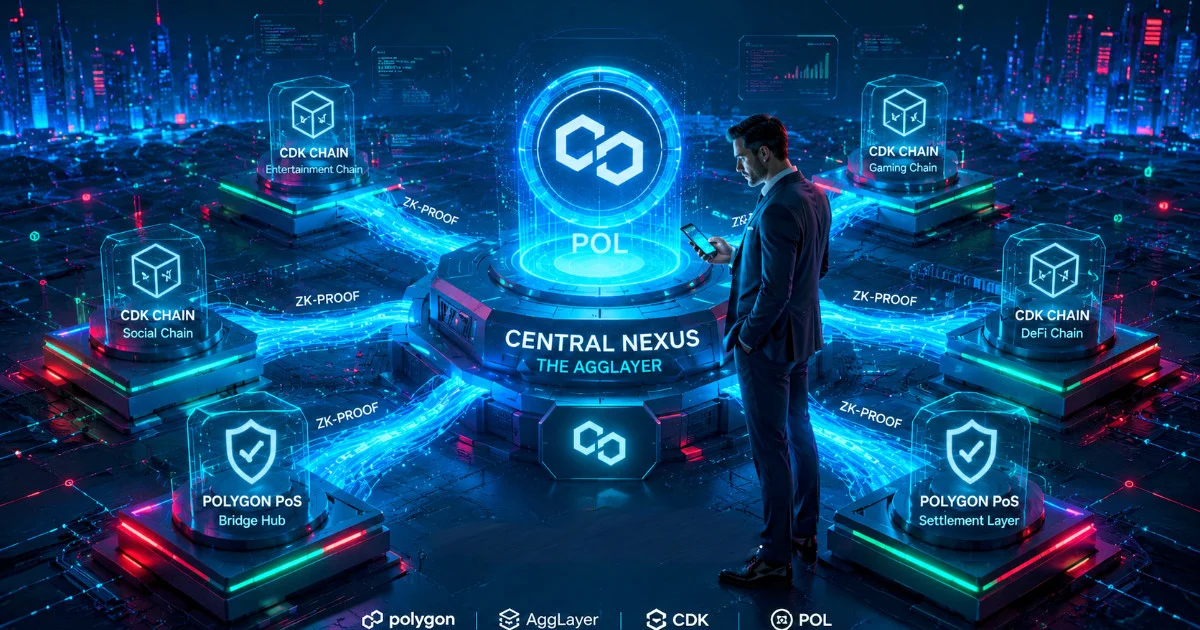
Underlying these pilots is Polygon’s broader strategy to build an "open money stack." As Jamal Raees, Polygon’s Head of US Payments, has outlined, the goal is to create a modular infrastructure that supports various asset types and compliance requirements. This approach allows enterprises to choose the specific tools they need—whether it’s for payments, tokenization, or DeFi—without being locked into a single monolithic solution. The result is a flexible, scalable infrastructure that can adapt to the evolving needs of global finance.
Market Context
The institutional interest in Polygon is reflected in the broader market dynamics. As enterprises integrate these infrastructure solutions, the underlying asset’s utility and demand tend to grow. This correlation between infrastructure adoption and market performance is a key indicator of the network’s long-term viability.
Enterprise Infrastructure Components
Building on Polygon for enterprise DeFi isn't just about accessing the network; it's about leveraging a stack designed for compliance and scale. Polygon Labs provides a suite of tools that bridge the gap between traditional enterprise systems and decentralized finance. This infrastructure is the backbone of their 2026 strategy, ensuring that large-scale pilots can run with the reliability banks expect.
The Polygon Chain Development Kit (CDK) allows enterprises to launch customized Layer 2 rollups. Instead of building from scratch, companies can use CDK to create chains that inherit Polygon's security while maintaining specific governance or performance needs. This modularity is critical for institutions that require data sovereignty or tailored consensus mechanisms.
For integration, Polygon offers comprehensive SDKs and APIs. These tools simplify the connection between existing enterprise backends and Polygon-based payment infrastructure. Whether you are using the Polygon ID SDK for identity verification or the standard web3 SDKs for transaction handling, the goal is to reduce friction. This allows developers to focus on application logic rather than blockchain plumbing.
Compliance is non-negotiable for enterprise adoption. Polygon's infrastructure includes ISO 27001 and SOC 2 Type 2 certifications, providing the audit trails required by financial regulators. Combined with high availability (HA) and disaster recovery (DR) capabilities, these certifications transform Polygon from a speculative network into a viable banking rail.
Infrastructure Comparison
To understand where Polygon fits in the broader market, it helps to compare its enterprise-grade features against generic Layer 2 solutions and traditional banking rails. The table below highlights the key differentiators that make Polygon suitable for high-stakes DeFi pilots.
| Feature | Polygon Enterprise | Generic L2 | Traditional Banking |
|---|---|---|---|
| Compliance Certifications | ISO 27001, SOC 2 Type 2 | Varies (often none) | Standard (PCI-DSS, etc.) |
| Custom Rollup Support | CDK (Chain Dev Kit) | Limited or complex | Proprietary only |
| Integration SDKs | Full suite (APIs, Web3, ID) | Basic Web3 SDKs | Legacy APIs |
| Availability SLA | 24/7 with HA/DR | Best-effort | 99.9%+ guaranteed |
Essential Developer Tools
For teams ready to build, the following tools are essential for integrating Polygon's infrastructure into your workflow. These products represent the standard toolkit for enterprise blockchain development.


As an Amazon Associate, we may earn from qualifying purchases.
These components work together to create a robust environment for enterprise DeFi. By leveraging CDK for chain customization, SDKs for seamless integration, and certified infrastructure for compliance, enterprises can deploy DeFi solutions with confidence.
The chart above shows the recent performance of the MATIC token (now transitioning to POL), reflecting market sentiment around Polygon's infrastructure upgrades. While price action is secondary to utility, the underlying infrastructure remains the primary driver for long-term enterprise adoption.
Regulatory clarity reshapes enterprise infrastructure
The regulatory landscape for enterprise DeFi has shifted from uncertainty to enforceable standards. With the GENIUS Act signed and MiCA fully operational, the infrastructure choices Polygon Labs and its partners make today are no longer experimental—they are compliance-first deployments. This clarity removes the primary barrier to large-scale enterprise adoption: the fear of regulatory arbitrage or sudden policy reversals.
For infrastructure providers, this means stability. Enterprise pilots now rely on stablecoin rails that are explicitly recognized under these frameworks. Polygon’s focus on high-throughput, low-cost settlement aligns perfectly with the need for transparent, auditable transaction histories required by both US and EU regulators. The infrastructure is built to withstand scrutiny, not just market volatility.
This shift validates the strategic pivot toward institutional-grade tools. As Polygon Labs highlights, the question is no longer whether enterprise stablecoin payments are viable, but how to scale them efficiently within these new legal boundaries. The infrastructure is ready; the regulations have finally caught up.
Strategic assessment for institutional adoption
Enterprises viewing Polygon now should see it less as a speculative crypto chain and more as a dedicated infrastructure layer for stablecoin rails. Polygon Labs is actively repositioning the network through major acquisitions like Coinme and Sequence, signaling a clear pivot toward payments infrastructure rather than generic DeFi speculation [src-serp-3]. This strategic shift aligns with the "Open Money Stack" vision outlined by Jamal Raees, Polygon’s Head of US Payments, which targets seamless fiat-to-crypto integration for traditional finance [src-serp-6].
The technical foundation remains anchored to Ethereum’s security model. Polygon operates as a Layer-2 network using a Plasma framework and Proof-of-Stake consensus, running parallel to the Ethereum mainnet. This architecture offers the finality institutions require while maintaining significantly lower transaction costs. For context on the broader market environment in which these pilots operate, the current performance of the asset class is tracked below.
While the infrastructure is robust, enterprises must weigh the risks of regulatory fragmentation against the opportunity of early adoption. The network’s growing integration with tokenized real-world assets, such as BlackRock’s BUIDL fund, provides tangible proof of institutional utility. However, reliance on Ethereum for settlement means Polygon is not immune to mainnet congestion or fee spikes during high-traffic periods. Companies should evaluate Polygon specifically for high-volume, low-value payment flows where speed and cost efficiency are critical operational requirements.
Frequently asked questions about Polygon DeFi
What is Polygon DeFi?
Polygon DeFi refers to decentralized finance applications running on Polygon's infrastructure. It leverages the network's high throughput and low fees to offer trustless financial products without intermediaries. This ecosystem has processed over $2.4 trillion in stablecoin transfer volume, serving partners like Mastercard and Stripe.
Did BlackRock invest in Polygon?
BlackRock's institutional fund, BUIDL, transferred $500 million worth of tokenized assets to the Polygon network. This strategic move confirms Polygon's role as a primary infrastructure layer for institutional-grade tokenization, validated by Polygon Labs.
Is Polygon PoS or PoW?
Polygon PoS uses a Proof-of-Stake (PoS) consensus mechanism, not Proof-of-Work. It operates as a sidechain parallel to Ethereum, utilizing Plasma frameworks to scale transactions efficiently while maintaining security.
Is Polygon connected to Ethereum?
Yes. Polygon is a Layer-2 network natively built on Ethereum. It uses Ethereum as its base settlement layer, ensuring that assets and security are anchored to the Ethereum mainnet while benefiting from Polygon's speed.
No comments yet. Be the first to share your thoughts!