Polygon Targets Enterprise DeFi
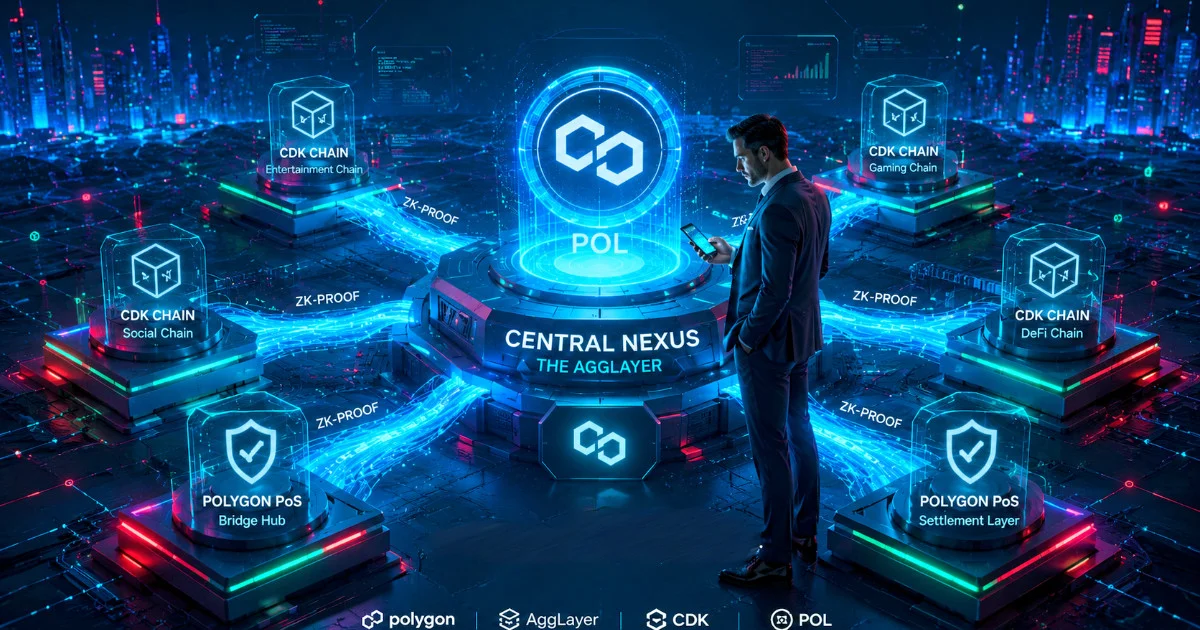
Polygon is executing a decisive pivot from its retail-focused origins to become the regulated infrastructure layer for institutional DeFi. This shift is anchored by a $250 million investment aimed at securing partnerships with major banks and payment processors. The goal is to position Polygon not just as a scaling solution, but as the compliant rail for traditional finance entering the digital asset space.
The strategy mirrors the integrated stacks emerging from traditional fintech giants like Stripe’s Tempo and Circle’s Arc. By investing heavily in compliance-ready infrastructure, Polygon aims to compete directly with these legacy-backed solutions. The focus is on providing the necessary regulatory guardrails that institutions require, such as identity verification and transaction monitoring, which were previously absent in the broader DeFi ecosystem.
This enterprise push is supported by aggressive technical upgrades designed to handle institutional-grade throughput. Polygon recently upgraded its network to process 1,400 transactions per second (TPS), with further scaling goals on the roadmap. This capacity is essential for high-volume financial applications, ensuring that enterprise DeFi pilots can operate without the latency or congestion that often plagues retail networks.
To contextualize the market sentiment around this infrastructure push, here is the live price of the POL token:
The combination of capital investment, technical scalability, and regulatory focus positions Polygon to capture the next wave of institutional adoption. By addressing the specific needs of banks and payment processors, Polygon is attempting to bridge the gap between decentralized innovation and traditional financial compliance.
Key pilot programs and institutional partners
The shift from speculative trading to institutional infrastructure is visible in three major pilots that have recently validated Polygon’s enterprise stack. These initiatives move beyond proof-of-concept status, handling real capital and regulatory requirements. Visa’s expansion of stablecoin settlement, JPMorgan’s tokenized cash deposits, and the Bank of Italy’s security token framework represent the most significant stress tests of Polygon’s capabilities to date.
Visa’s stablecoin settlement expansion
Visa’s integration with Polygon marks a critical milestone in cross-border payments. The network recently expanded its stablecoin settlement pilot to include Polygon alongside four other blockchains, creating a unified rails for global transfers. This expansion allows financial institutions to settle transactions in stablecoins with near-instant finality, bypassing traditional correspondent banking delays.
The scale of adoption is measurable. As of April 2026, the pilot reached a $7 billion annualized stablecoin settlement run rate, representing 50% growth from the previous quarter. This growth trajectory demonstrates that institutional demand for blockchain-based settlement is not just theoretical but is actively scaling. For enterprises, this means Polygon is no longer just a testbed but a production-ready network for high-volume fiat-pegged transactions.
JPMorgan’s tokenized cash deposits
JPMorgan Chase has utilized Polygon to execute trades involving tokenized cash deposits, a move described as a "monumental step" for decentralized finance. By leveraging Polygon’s public blockchain infrastructure, the bank demonstrated that traditional banking assets can be tokenized and traded with the efficiency of DeFi protocols while maintaining the security standards required by Wall Street.
This pilot highlights Polygon’s ability to handle complex financial instruments. Tokenized deposits allow banks to offer liquidity and yield opportunities to clients while retaining control over the underlying assets. The use of a public blockchain for such sensitive transactions underscores Polygon’s compliance features and its capacity to integrate with existing banking legacy systems without compromising transparency or auditability.
Bank of Italy’s security token pilot
The Bank of Italy has tapped Polygon for a pilot aimed at creating a regulated environment for security token trading. This initiative focuses on exploring different designs for security tokens, ensuring they meet strict regulatory standards while benefiting from blockchain efficiency. The pilot is significant because it involves a central bank, signaling potential future adoption of tokenized securities in the broader European financial system.
By using Polygon, the Bank of Italy is testing the infrastructure needed for a secondary market for tokenized assets. This includes managing identity verification, compliance checks, and settlement finality in a way that aligns with EU regulations. The pilot provides a blueprint for how central banks can leverage existing blockchain networks to modernize capital markets without building proprietary systems from scratch.
The price action of POL often reflects the market’s reaction to these institutional developments. While short-term volatility persists, the underlying trend is supported by increasing real-world asset (RWA) integration.
Stablecoin rails and payment infrastructure
Enterprise finance teams are moving beyond experimental pilots to deploy stablecoin infrastructure for three core functions: cross-border B2B payments, treasury management, and payroll. Unlike traditional banking rails, which rely on layered correspondent networks, Polygon’s infrastructure provides a unified settlement layer that operates 24/7 with near-instant finality.
The operational advantage lies in composability. By opening its infrastructure to crypto partners, Polygon enables finance teams to access global liquidity channels while maintaining compliance through regulated stablecoin issuers. This setup reduces the friction of multi-currency reconciliation and eliminates the delays inherent in SWIFT transfers for urgent treasury movements.
However, the market is crowded with integrated stacks promising similar benefits. To understand where Polygon fits, it helps to compare its open-architecture approach against the closed-loop solutions offered by Stripe’s Tempo and Circle’s Arc.
| Feature | Polygon | Stripe Tempo | Circle Arc |
|---|---|---|---|
| Architecture | Open protocol | Closed loop | Closed loop |
| Settlement Speed | < 2 seconds | Real-time (US only) | Real-time (US only) |
| Cross-Border Scope | Global | Limited (US-centric) | Limited (US-centric) |
| Compliance Model | Partner-based (KYC/AML) | Integrated | Integrated |
| Target Use Case | Multi-chain treasury & payroll | Merchant payments | Treasury & payroll |
The distinction is architectural. Stripe and Circle offer streamlined, "walled garden" experiences that are easier to integrate for US-centric operations but limit flexibility. Polygon’s model requires more initial setup but offers superior scalability for global enterprises needing to move value across borders and currencies without being locked into a single provider’s ecosystem.
The enterprise adoption choices that change the plan
Implementing Polygon for enterprise DeFi requires navigating a complex intersection of technical debt and regulatory ambiguity. While the infrastructure for stablecoin payments and cross-border B2B settlements is proven, the legal frameworks surrounding security tokens and cross-border digital asset movements remain fragmented across jurisdictions.
The primary hurdle is often integration. Legacy banking systems, built on decades of closed-loop architectures, do not natively speak the language of public blockchains. Bridging this gap demands significant middleware investment and rigorous testing to ensure that settlement finality on-chain aligns with internal accounting periods. As J.P. Morgan notes in its analysis of Institutional DeFi, the potential for transformational impact is real, but it hinges on overcoming these structural frictions between TradFi and decentralized protocols.
Competition also comes from private ledgers. Many large financial institutions prefer permissioned networks where they retain full control over governance and data privacy. However, public chains like Polygon offer distinct advantages in liquidity access and interoperability that private ledgers cannot replicate without building extensive peer-to-peer bridges. The decision often comes down to whether an enterprise prioritizes absolute control or broader market connectivity.
Evaluating Polygon for institutional use
Use this section to make the Polygon Enterprise DeFi Pilots decision easier to compare in real life, not just on paper. Start with the reader's actual constraint, then separate must-have requirements from details that are merely nice to have. A practical choice should survive normal use, maintenance, timing, and budget. If a recommendation only works in an ideal situation, call that out plainly and give the reader a fallback path.
-
Verify the basicsConfirm the core specs, condition, and fit before comparing extras.
-
Price the downsideLook for the repair, maintenance, or replacement cost that would change the decision.
-
Compare alternativesCheck at least two comparable options before treating one listing as the benchmark.
No comments yet. Be the first to share your thoughts!