The 2026 pivot to enterprise settlement
Polygon is undergoing a structural identity shift. In 2026, the network is moving away from its origins as a general-purpose Layer 2 for consumer-facing decentralized applications. Instead, it is repositioning itself as dedicated infrastructure for regulated finance. This pivot redefines Polygon not as a playground for speculative DeFi, but as a backend money rail for institutional settlement.
The core of this new strategy is the "Open Money Stack." Rather than competing for retail liquidity, Polygon is building the plumbing for stablecoin payments. This approach targets the friction points that currently plague cross-border activity. By offering a dedicated settlement layer, Polygon aims to provide the speed and cost efficiency that traditional banking rails cannot match, while maintaining the compliance standards required by enterprises.
Jamal Raees, Polygon’s Head of US Payments, has highlighted this shift at recent industry forums like Consensus 2026. The focus is no longer on building the next viral NFT collection, but on integrating with existing financial systems. This means prioritizing partnerships with banks, payment processors, and asset issuers who need a reliable, high-throughput network for moving value.
This enterprise-first approach changes the value proposition of the POL token. It becomes less about speculative trading volume and more about the utility of the underlying infrastructure. For institutions, the appeal lies in the predictability of settlement times and the lower cost of capital movement. Polygon is essentially becoming the digital equivalent of the SWIFT network, but with the immediacy of blockchain technology.
The implications for the broader market are significant. As more traditional financial players adopt this stack, Polygon’s role in the global financial system expands. It is no longer just an Ethereum sidechain; it is becoming a primary channel for institutional stablecoin flows. This transition requires rigorous security and compliance, areas where Polygon is now concentrating its development resources.
Key pilots driving institutional adoption
Institutional adoption in 2026 is no longer theoretical. Polygon has moved past the proof-of-concept phase into live, high-stakes pilots that address specific regulatory and operational bottlenecks. Two initiatives stand out for their structural impact: the Bank of Italy’s security token framework and enterprise cross-border stablecoin payments.
Security tokens and regulatory clarity
The Bank of Italy pilot represents a significant shift in how central banks view distributed ledger technology. Rather than experimenting with currency, the focus is on the infrastructure for regulated asset trading. This pilot aims to create a secure, compliant environment for security tokens, testing different architectural designs to ensure they meet strict financial oversight requirements. By validating Polygon’s capacity to handle these sensitive instruments, the initiative provides a blueprint for other central banks considering tokenized securities.
Cross-border stablecoin payments
Simultaneously, enterprise finance teams are deploying stablecoins for cross-border B2B payments and treasury management. This use case leverages Polygon’s low latency and minimal transaction costs to replace traditional, slower correspondent banking channels. The goal is straightforward: reduce settlement times from days to seconds while cutting intermediary fees. This practical application demonstrates how blockchain infrastructure can solve immediate liquidity and efficiency problems for multinational corporations.
Pilot comparison
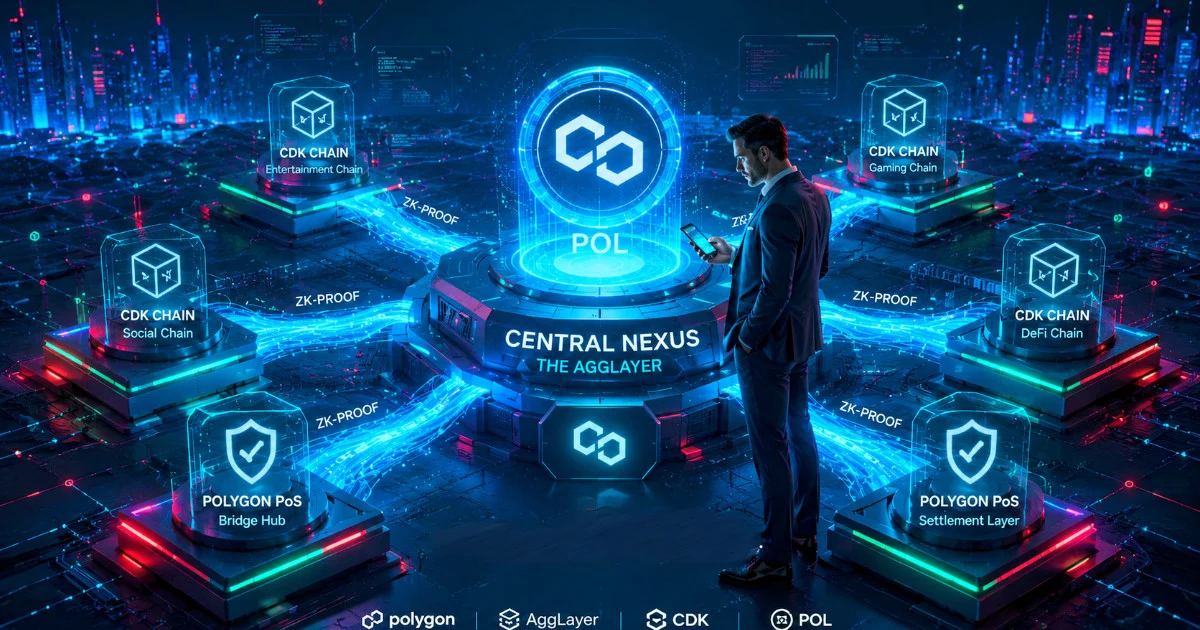
The following table outlines the distinct objectives and regulatory contexts of these primary pilot categories.
| Use Case | Regulatory Status | Infrastructure Component |
|---|---|---|
| Security Token Trading | Central Bank Supervised | Polygon CDK |
| Cross-Border Payments | Compliant Stablecoin | Polygon AggLayer |
| Corporate Treasury | Enterprise Compliance | Polygon zkEVM |
Infrastructure requirements for enterprise scale
Enterprise DeFi pilots on Polygon are no longer experimental; they are becoming part of the standard financial stack. For 2026, the focus has shifted from speculative yield to institutional-grade infrastructure. This means building systems that can handle high-volume cross-border payments, manage treasury assets, and process payroll while strictly adhering to regulatory frameworks.
The technical foundation relies on Polygon’s Layer 2 architecture, which offers the speed and low cost necessary for traditional finance (TradFi) integration. However, speed alone is not enough. Enterprise clients require robust compliance layers, including on-chain identity verification and privacy-preserving transaction capabilities. These features allow financial institutions to meet Know Your Customer (KYC) and Anti-Money Laundering (AML) requirements without exposing sensitive customer data on a public ledger.
Interoperability with traditional finance rails is equally critical. Enterprises need seamless bridges between blockchain networks and legacy banking systems. Polygon’s growing ecosystem of RPC nodes and enterprise-grade APIs facilitates this connection, enabling real-time settlement and asset tokenization. As noted in recent enterprise insights, the growth in RPC traffic from corporate clients is largely driven by these tokenization pilots and DeFi integrations, signaling a strong demand for reliable, scalable infrastructure.
Essential Tools for Enterprise Integration
To support these complex infrastructure needs, enterprises often rely on a suite of specialized tools for monitoring, compliance, and transaction management. Below are key resources that help finance teams manage the technical and regulatory landscape of enterprise DeFi.



As an Amazon Associate, we may earn from qualifying purchases.
Key Takeaways
- Compliance First: On-chain identity and privacy features are non-negotiable for enterprise adoption.
- Interoperability: Seamless integration with TradFi rails is essential for real-world utility.
- Scalability: Polygon’s Layer 2 infrastructure provides the speed and cost-efficiency required for high-volume transactions.
For more detailed guidance on implementing stablecoin payments and treasury management, refer to Polygon’s Practical Guide for Enterprise.
Headwinds and competition
Polygon faces a difficult stretch in 2026. The bear case centers on three converging pressures: a sluggish POL price, persistent outflows from Total Value Locked (TVL), and intensifying competition from other Layer-2 networks like Arbitrum and Base. While enterprise pilots show promise, the broader market metrics suggest that Polygon is losing ground in the race for developer mindshare and capital efficiency.
The POL token has struggled to find a sustainable floor, reflecting broader skepticism about the network's ability to monetize its scale. This price stagnation is mirrored in the protocol's TVL, which has seen steady outflows as capital seeks higher yields or more active ecosystems elsewhere. The disconnect between enterprise adoption and retail/DeFi liquidity creates a fragile foundation, where institutional interest has not yet translated into the organic growth needed to support token value.
Competition is the most immediate threat. Arbitrum continues to dominate in DeFi activity, while Base benefits from Coinbase's massive user base and seamless onboarding. Polygon's unique value proposition—enterprise-grade infrastructure—is compelling for specific B2B use cases, but it does not yet offer the same network effects or liquidity depth that attract the broader crypto economy. This leaves Polygon in a precarious position, needing to bridge the gap between corporate utility and public market vitality.
Strategic outlook for enterprise defi
The trajectory of Polygon’s enterprise DeFi pilots hinges on a fundamental shift: moving from speculative infrastructure to tangible utility. While the network has long served as Ethereum’s primary scaling partner, 2026 marks a critical juncture where institutional adoption must justify the underlying capital expenditure. The recent confirmation of BlackRock’s $500 million investment in the Polygon network via its BUIDL fund signals a maturation of the ecosystem, suggesting that enterprise players are no longer testing the waters but committing significant capital to tokenized asset infrastructure.
This institutional validation provides a counter-narrative to broader market volatility. However, sustainable growth requires more than high-profile partnerships; it demands seamless interoperability and regulatory clarity. Polygon’s strategy of offering diverse scaling solutions—from ZK-rollups to sidechains—allows enterprises to choose architectures that best fit their compliance and performance needs. The challenge lies in maintaining this flexibility without fragmenting liquidity or user experience.
Looking ahead, the success of these pilots will likely determine whether Polygon can maintain its competitive edge against other Layer-2 competitors and traditional financial rails. If the network can demonstrate consistent throughput and lower costs for enterprise-grade transactions, it may indeed redefine the future of DeFi by bridging the gap between decentralized protocols and institutional finance. The coming year will test whether these strategic alliances can translate into measurable network activity and revenue.
No comments yet. Be the first to share your thoughts!