The shift to enterprise stablecoin rails
Polygon’s recent strategic pivot marks a decisive break from the speculative trading cycles that defined much of the early DeFi era. The network is no longer just chasing daily transaction volume spikes driven by retail speculation; it is building the plumbing for institutional settlement. This shift toward enterprise-grade stablecoin infrastructure reflects a broader maturity in the market, where finance teams are prioritizing reliability, compliance, and cost-efficiency over yield farming opportunities.
The core of this strategy lies in replacing traditional, fragmented cross-border payment systems with on-chain stablecoin rails. For enterprise finance departments, the value proposition is straightforward: stablecoins offer near-instant settlement and predictable fees, eliminating the multi-day delays and hidden FX costs associated with legacy SWIFT transfers. Polygon’s focus on B2B payments and treasury management addresses a specific pain point for global corporations that need to move capital across borders without relying on intermediary correspondent banks.
This transition is not merely theoretical. Polygon has actively pursued acquisitions and partnerships to secure the middleware and liquidity solutions necessary for enterprise adoption. By acquiring specialized infrastructure providers, the network aims to capture value that previously leaked to third-party aggregators, offering a more integrated and secure experience for corporate treasuries. The goal is to create a seamless bridge between traditional banking systems and decentralized finance, enabling businesses to manage payroll, supplier payments, and international settlements on-chain.
The move toward enterprise DeFi also implies a stricter adherence to regulatory standards. Unlike the wild-west era of DeFi, enterprise solutions require robust identity verification, audit trails, and compliance tools. Polygon’s infrastructure is evolving to support these requirements, ensuring that stablecoin transactions meet the scrutiny of financial regulators while retaining the speed and efficiency of blockchain technology.
This strategic realignment positions Polygon as a critical layer for the next phase of digital finance. By focusing on practical, high-volume use cases like B2B settlement, Polygon is building a sustainable economic model that relies on real-world utility rather than speculative liquidity.
Key enterprise pilot use cases in 2026
Enterprise finance teams have moved past experimental phases and are now running stablecoin infrastructure at scale. The focus has shifted from speculative yield to operational efficiency, targeting three core areas: cross-border B2B payments, payroll distribution, and treasury management. These pilots leverage Polygon’s low-cost, high-throughput network to solve legacy friction points that traditional banking rails struggle with.
Cross-border B2B payments
International suppliers and buyers are using stablecoins to settle invoices in near real-time. Instead of waiting days for SWIFT transfers to clear—and incurring multiple intermediary bank fees—companies initiate payments on-chain. The transaction settles in seconds with predictable, minimal fees. This is particularly valuable for high-volume, low-margin trades where even small currency conversion losses or delays impact profitability.
Global payroll distribution
Multinational corporations are testing stablecoin payroll for remote teams in regions with volatile local currencies or limited banking access. By paying employees in USDC or other regulated stablecoins, companies ensure consistent purchasing power and immediate liquidity for workers. This reduces administrative overhead associated with international wire transfers and foreign exchange compliance checks.
Treasury management
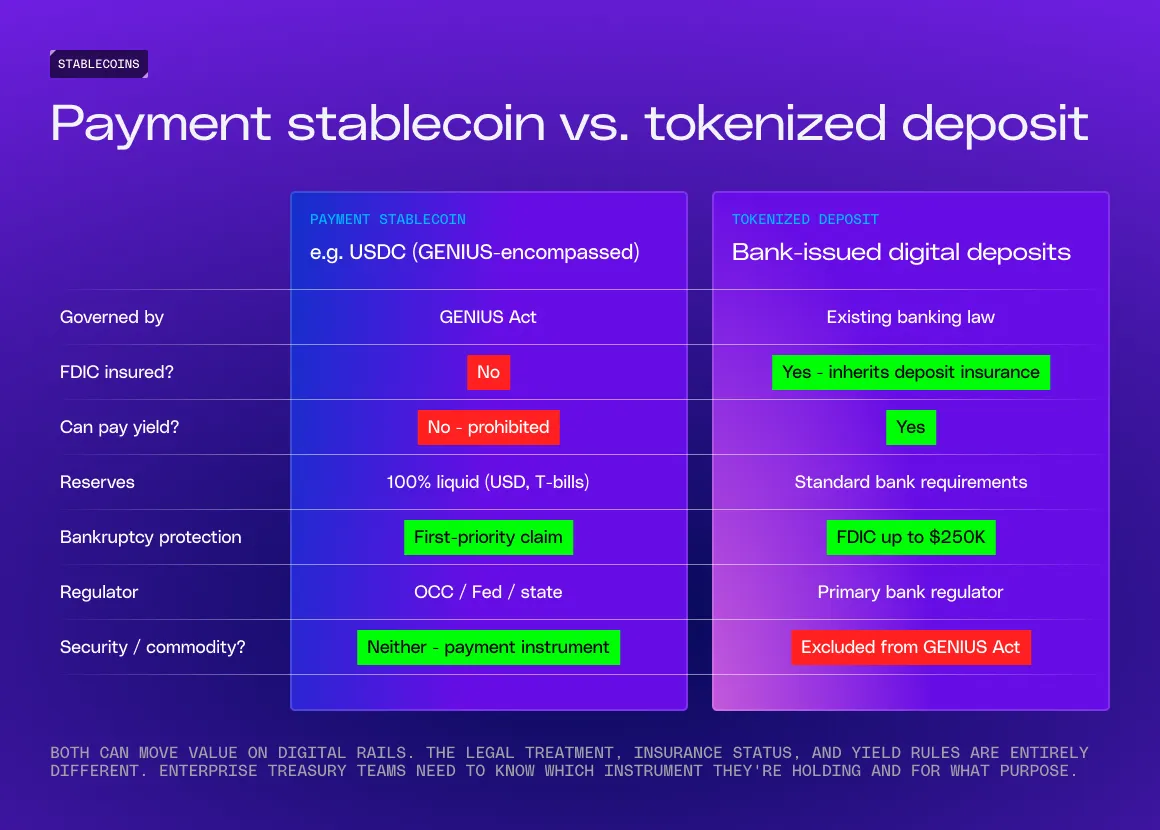
Corporate treasuries are allocating portions of their cash reserves to on-chain stablecoin strategies. This allows for automated yield generation through decentralized money markets while maintaining liquidity for daily operations. The transparency of on-chain ledgering also simplifies audit trails, providing real-time visibility into asset movements that traditional custodial solutions often obscure.
Strategic acquisitions and partnerships
Polygon is systematically closing the infrastructure gaps that typically block institutional adoption. Rather than relying solely on open-source development, the network is acquiring specialized middleware and forming deep strategic alliances to create a cohesive enterprise DeFi stack. This approach targets the friction points of user onboarding, compliance, and institutional-grade asset issuance.
The acquisition of Xalts and the partnership with Kaleido illustrate this focus on accessibility and infrastructure. Xalts provides the smart wallet infrastructure necessary to abstract away private key management, a critical hurdle for enterprise users. Meanwhile, the alliance with Kaleido allows enterprises to deploy dedicated blockchain networks, ensuring the privacy and performance standards required by traditional finance.
On the asset issuance front, the strategic alliance with Ondo Finance brings institutional-grade tokenized products directly to Polygon users. This partnership bridges the gap between traditional treasury instruments and on-chain liquidity. By integrating Ondo’s real-world asset (RWA) protocols, Polygon positions itself as a primary rail for tokenized securities, moving beyond speculative assets to serve actual capital markets.
The most visible proof of this strategy is the integration with Revolut. By embedding Polygon Labs’ infrastructure into Revolut’s super-app, Polygon gains access to millions of retail and prosumer users while demonstrating its capacity to handle high-volume, regulated transactions. This is not merely a marketing partnership; it is a functional integration that processes significant transaction volume, validating Polygon’s technical readiness for enterprise-scale DeFi.
| Partner | Infrastructure Contribution |
|---|---|
| Xalts | Smart wallet and account abstraction for easier onboarding |
| Kaleido | Dedicated blockchain network deployment for enterprise privacy |
| Ondo Finance | Institutional-grade tokenized real-world asset (RWA) products |
| Revolut | Mass-market user access and high-volume transaction processing |
Infrastructure tools for institutional adoption
Institutional adoption requires more than just a blockchain; it demands the same reliability and compliance features found in traditional finance. Polygon provides a suite of enterprise-grade infrastructure tools designed to bridge the gap between decentralized protocols and institutional requirements. These tools address three primary needs: resilient connectivity, trade lifecycle management, and seamless user onboarding.
Resilient RPC and Node Infrastructure
For enterprises, downtime is not an option. Polygon offers dedicated RPC (Remote Procedure Call) endpoints that provide high throughput and guaranteed uptime, far exceeding the capabilities of public, unmanaged nodes. Providers such as Chainstack, Ankr, and QuickNode offer enterprise-ready solutions with features like audit trails, compliance filtering, and dedicated support. These services ensure that transaction execution remains consistent even during periods of high network congestion, a critical factor for trading platforms and financial applications.
Order Management Systems (OMS)
To integrate with existing financial workflows, Polygon supports Order Management Systems (OMS) that can interact directly with smart contracts. These systems allow institutions to manage order routing, execution, and settlement without leaving their preferred trading environments. By connecting to Polygon’s Layer 2 infrastructure, OMS providers can offer near-instant trade confirmation and lower fees, making it viable for high-frequency trading strategies and large-volume institutional orders.
Embedded Wallet Integrations
Onboarding users to DeFi has historically been a friction point. Polygon’s infrastructure supports embedded wallet solutions that abstract away the complexity of private keys and seed phrases. These tools allow applications to create non-custodial wallets in the background, enabling users to interact with DeFi protocols using familiar login methods like email or social accounts. This approach reduces onboarding time from minutes to seconds, significantly improving user retention and accessibility for mainstream audiences.

Navigating compliance and regulatory barriers
For enterprises, the gap between DeFi innovation and regulatory reality is the primary hurdle. Polygon addresses this not by bypassing rules, but by embedding compliance into the infrastructure layer. The strategy focuses on providing the tools necessary for KYC/AML adherence and creating immutable, auditable trails that satisfy financial regulators.
Identity and Access Management
Polygon’s approach to identity is modular. Rather than forcing a single standard, the ecosystem supports various identity protocols that allow enterprises to verify user credentials before on-chain interaction. This "compliance-by-design" model ensures that only verified entities can access specific DeFi pools, effectively creating a permissioned layer within a public network. This is critical for institutions that must adhere to strict data privacy and anti-money laundering regulations.
Audit Trails and Transparency
Regulators require clear, immutable records of transaction history. Polygon’s EVM compatibility ensures that every transaction is recorded with full transparency, yet the network’s scalability allows for the storage of detailed metadata alongside transactions. This creates a robust audit trail that finance teams can leverage for real-time reporting and forensic analysis, reducing the risk of non-compliance penalties.
Enterprise-Grade RPC Infrastructure
Accessing the network securely is equally important. Enterprise-grade RPC providers now offer specialized endpoints that support compliance filtering and enhanced security features. These services allow institutions to monitor traffic, enforce access controls, and ensure that their interactions with the blockchain meet internal security standards.
-
Verify KYC/AML integration capabilities with identity providers
-
Ensure RPC endpoints support compliance filtering and audit logging
-
Test transaction metadata storage for regulatory reporting needs
-
Confirm smart contract compatibility with existing legal frameworks
Helpful gear
Use these product recommendations as a starting point, then choose the size, material, and price point that fit how you actually use the gear.


As an Amazon Associate, we may earn from qualifying purchases.
No comments yet. Be the first to share your thoughts!